
-
Three ideas for improving the design of leadership training

Leadership roles can feel a little bit like heading off for an unplanned adventure. We should do what we can to make this experience a little easier on the hearts and minds of people. So, these are some of my thoughts on where to start with leadership development training.
1. Provide manager essentials education to all people leaders
You need to induct managers into their role and explain the expected standards. This provides managers with a blueprint of what the business expects and what they will navigate. You don’t need to dive deep into every skill at this stage, just the act of providing a mental roadmap will speed up the learning curve for new managers.
The lack of clarity about what it means to be a manager creates compounding problems across organisations. For example, managers are essential for successful org change, however they don’t realise the role they need to play.
When I say clarity, I mean it’s time to cut the blurry words. There are standards organisations expect of managers, so sometimes it’s up to savvy instructional designers to help organisations define them – but we need to be specific! Instead of have regular coaching conversations, a clearer standard would be…
… prioritise coaching by booking a one-to-one with each of your employees, each week for a duration of 60 minutes. During the conversation ask at least three coaching questions… .
If you tell managers that’s what you expect (and then you train it and measure it) you’re on the way to a good leadership program.
2. Identify which leadership areas are causing the most pain for the business
I find when people talk about leadership training, they are referring to a great many skills. Generally, they are speaking to a mix of skills across people management, operations management and personal effectiveness. The desired outcome often the same – build capability to drive results through people and systems.
By examining your audience and the needs of the business you can pin point the content and learning experiences your people need. So, once you’ve delivered your manager essentials program, you can build on it will meaningful initiatives.
3. Think about the blend
The best leadership program or training I’ve participated in … was my Restaurant Manager program (RLP) back almost 15 years ago with McDonalds Australia. It wins for me because it was a well integrated program making me an effective leader for the job I needed to do.
The program comprised of completing a folder of activities, case studies, reflections, content and work integrated projects. I was provided with specific coaching sessions with my operations manager on specific topics. The workshops were practical and immersive and when I returned I had to implement an action plan.
I had a number of competency sign offs as I went and my workbook and progress was marked and assessed as I went, if I wasn’t getting a concept, I knew straight away. I had a great trainer.
One topic was on the stages of team development. I had to learn this concept, explore a case study on it, build a bench plan for my store, assess the culture of the team and then action plan to improve the team dynamic. It made that skill stick like glue!
I’ve been to some wonderful leadership talks, residential and multi-day programs. They were useful, inspiring and I learned a few things – but when I think about a full integrated experience, RLP is what I think of. So, when we’re designing for leadership, consider how we’re making it practical and real every step of the way.
***
Leadership development is amazing because it’s a sweet spot of people management, business operations and personal effectiveness. It’s skills for life! When we deliver great leadership programs we make people great leaders at work and in life!
-
Hanging out with the seals at Shag Point!
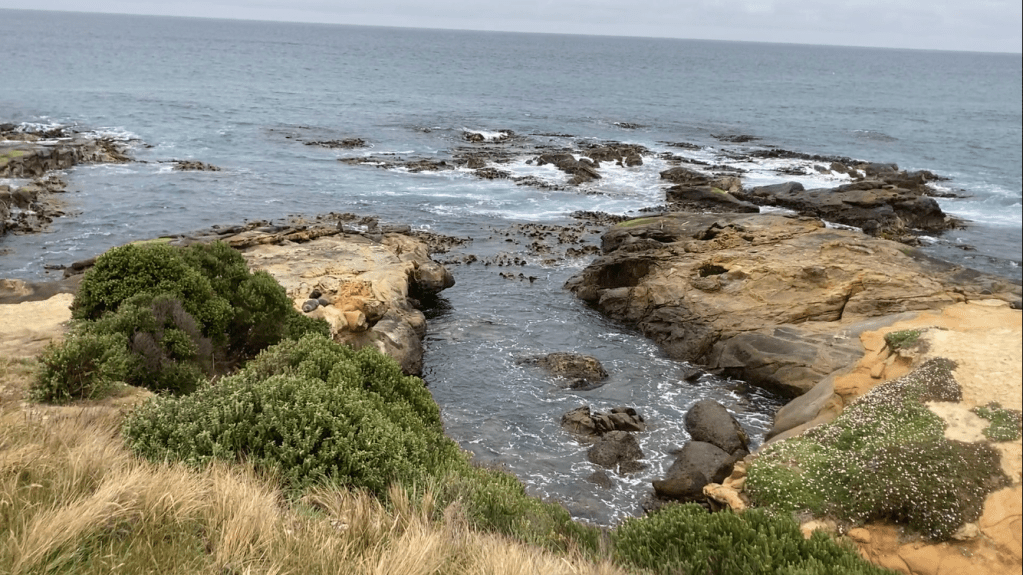
On a recent visit to New Zealand, we were driving down to Dunedin from Christchurch. Along the way we pulled off to an area called Shag Point which had a seal lookout. I didn’t expect to see much of anything, but we thought why not give it a go. To my absolute JOY there were plenty of seals baking in the sun.
We followed all instructions and kept a good distance away, behind the fences, as not to disturb them.
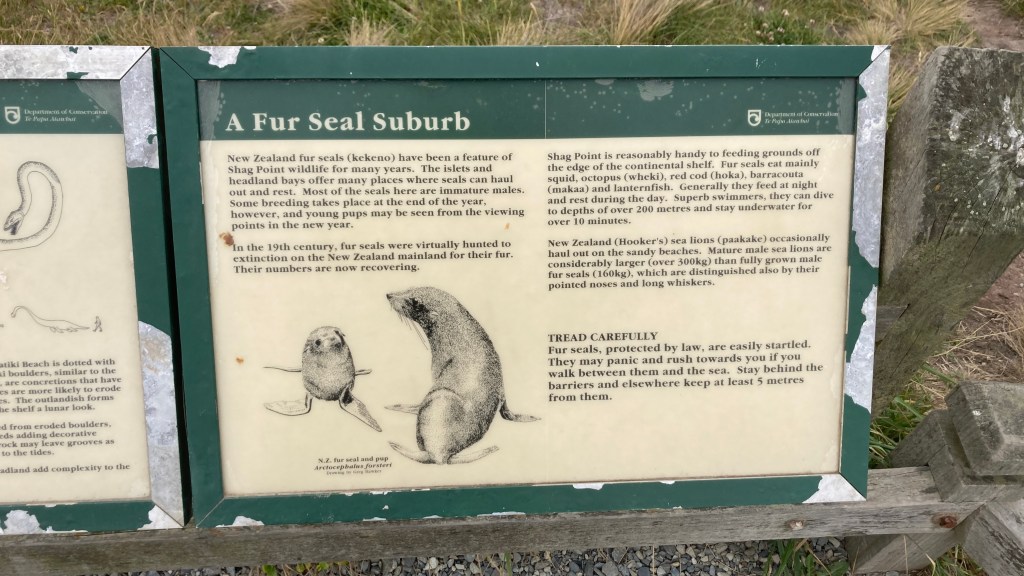
They were so adorable….it was relaxing to be in the presence of such chillaxed creatures. Let me show you some pictures.
This lil guy is out on exile island, not another seal in site on this side.

This little bean just chillen in the sun. I think it’s a little baby one because it’s grey.
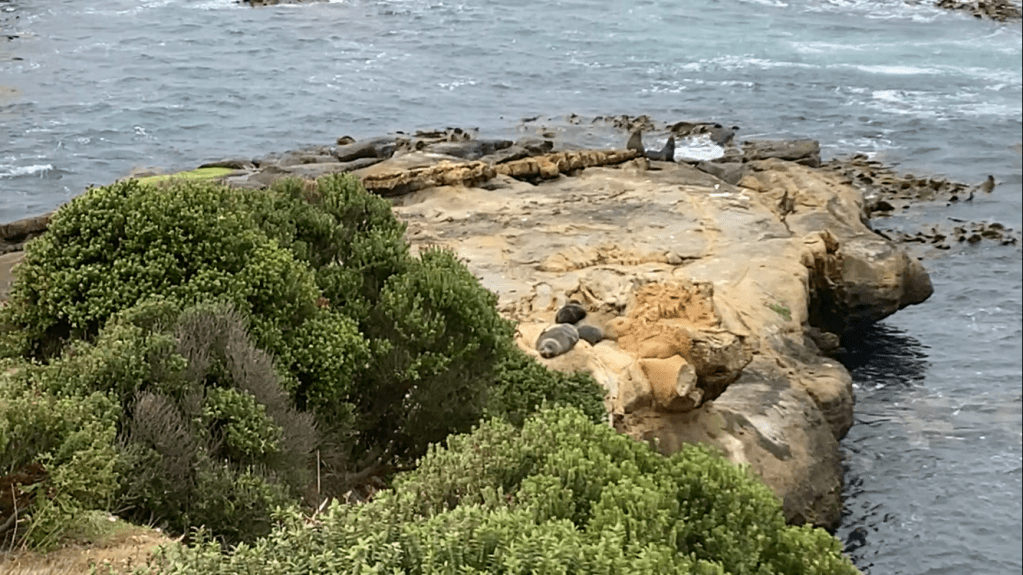
Then we have this little loner doing his thing.

It was such a great little surprise to be greeted by their little faces on the shoreline. Experiences like this help me to put my work and life stressors into context, to feel a bit more grounded.
– Cherish 🙂
-
Marvelling at the Tasman Glacier, Mt Cook NZ

Glaciers aren’t something I’ve given much thought to. Y’know, other than hearing they are melting and seeing photos of their glistening white shapes stretch across the poles.
So, recently I was in Mt Cook, New Zealand and went on a little boat ride out to the Tasman Glacier! Here are some things I learned that made me go … heck yeah glaciers are sweet as bro’.
#1. Glaciers don’t look like what I thought they would look like
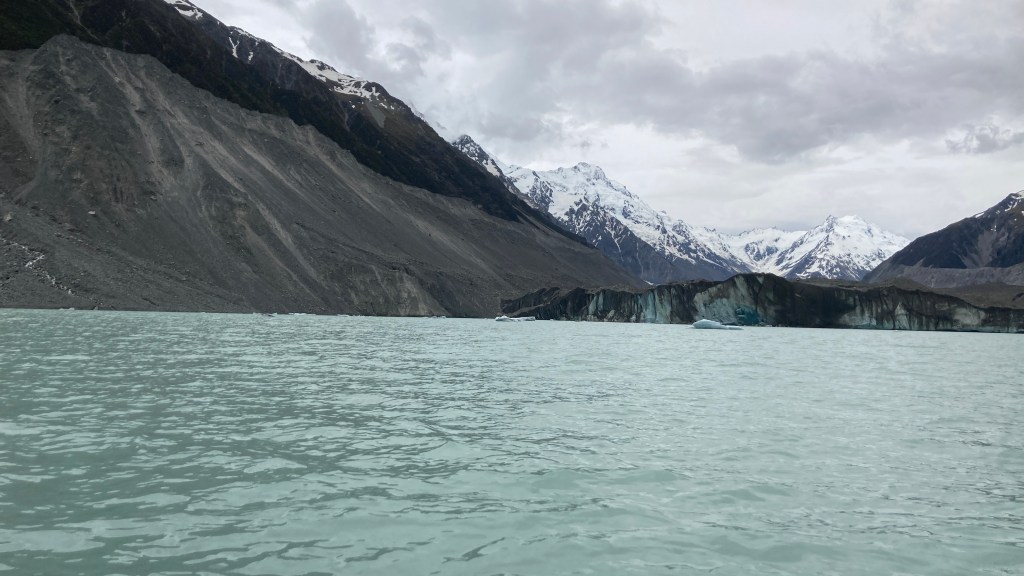
Here’s a photo, the glacier is the big wall in the middle of the picture.
Tasman Glacier (2022) taken by Cherish Bentley Firstly, it wasn’t white and secondly it was covered in dirt. Now, the guide said that there’s about two meters of crushed rock that has slid down from the mountains covering the glacier. The crushed rock serves a very important role, it ensures the glacier doesn’t melt.. as quickly. Because the dirt insulates it from the heat. How cool is nature!
I also expected glaciers to be floating in the middle of a lake or something. But no, the Tasman glacier has formed at the bottom of a deep valley – which again is very cool.
#2. Blue ice is special
Okay, there is something called BLUE ICE. It’s the most dense version of ice, about 100 times denser than what you can make in your freezer. Blue ice is found inside the glacier or in the areas that haven’t seen the sun. When blue ice is exposed to the sun the ice crystals start to form and get bigger and then it turns white. Why is it blue? Well because it’s so dense, only blue light can travel through it.
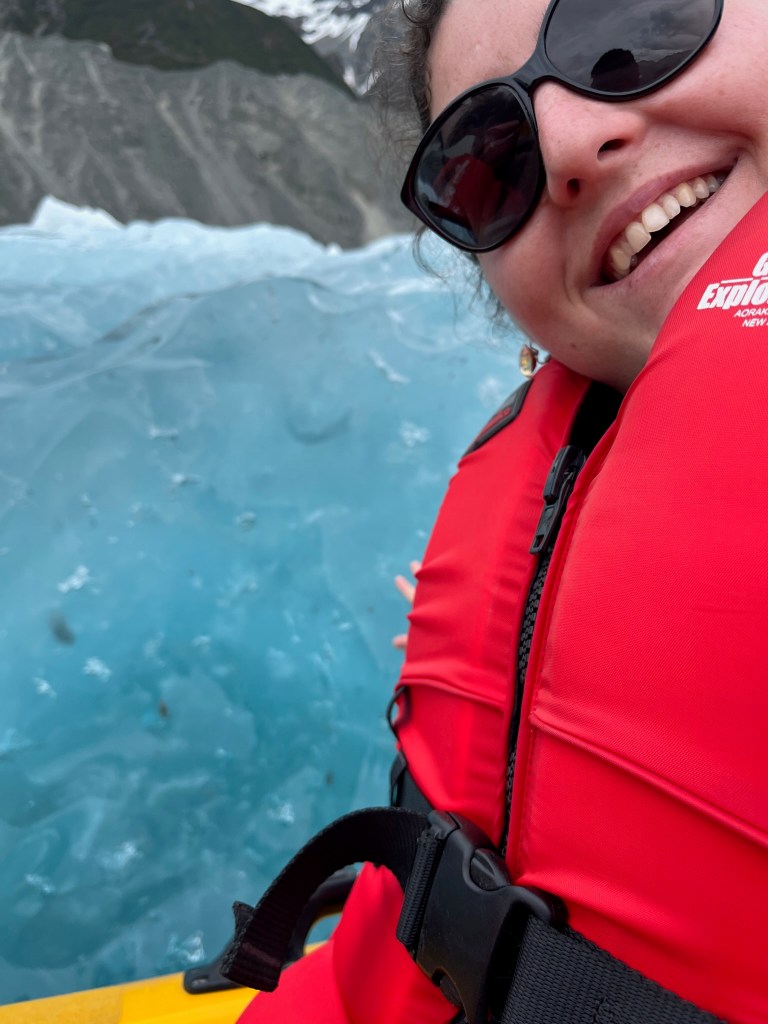
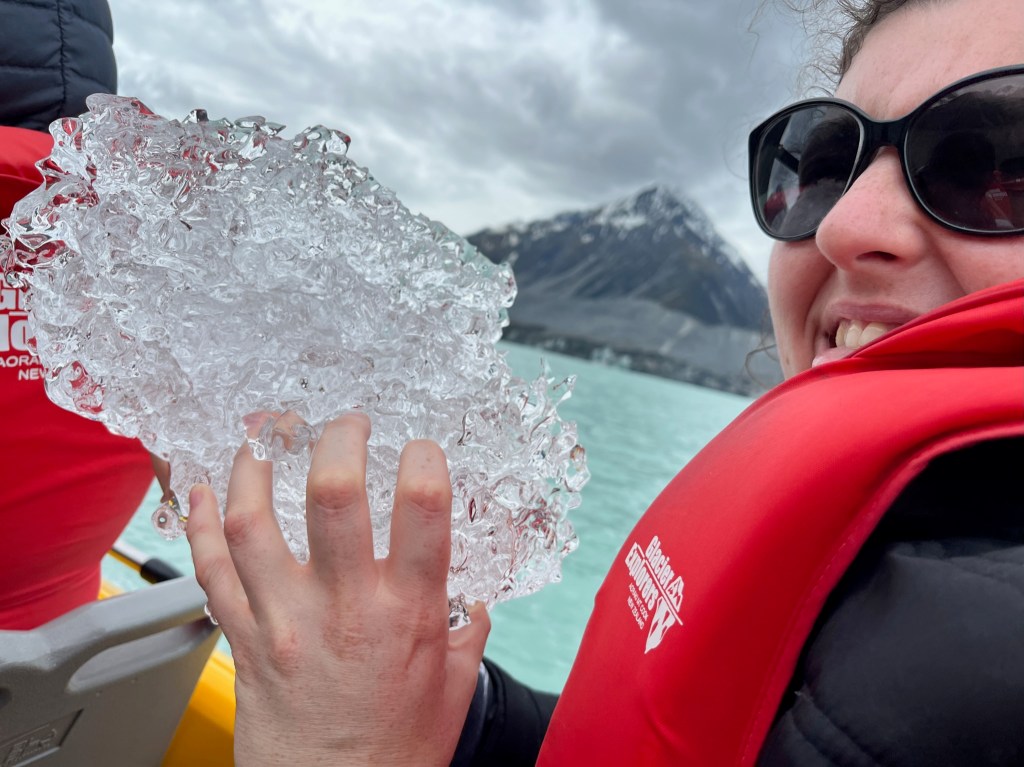
Me hanging with tiny iceberg The guide was so passionate about the marvels of blue ice and she helped us get up close and experience it. She talked about how it appears as the icebergs roll over and in just 30 minutes, blue ice turns white. Her passion was such a vibe, great example of how a passionate engages minds and hearts.
#3. They are like 3D puzzles
When we got up close to a couple of little icebergs they weren’t a big solid block, they were a mesh of 1000s of chunks of ice that fitted together like a puzzle, each different. One piece broke off and I got to examine the the intricate shape. Beautiful example of nature showing us that it takes multiple unique parts to create a whole.
#4. How quick they are changing
In the early 80s this entire lake was the glacier. In just 40 years, 7km of ice has melted and created this lake. The Tasman Glacier is predicted to loose at least 150m each year… which means it won’t be around in 150 years. My grandchildren will be the last people to visit it. It’s a sombre reminder that our natural world is changing.
Tasman Glacier (2022) taken by Cherish Bentley #5. There is so much more to know!
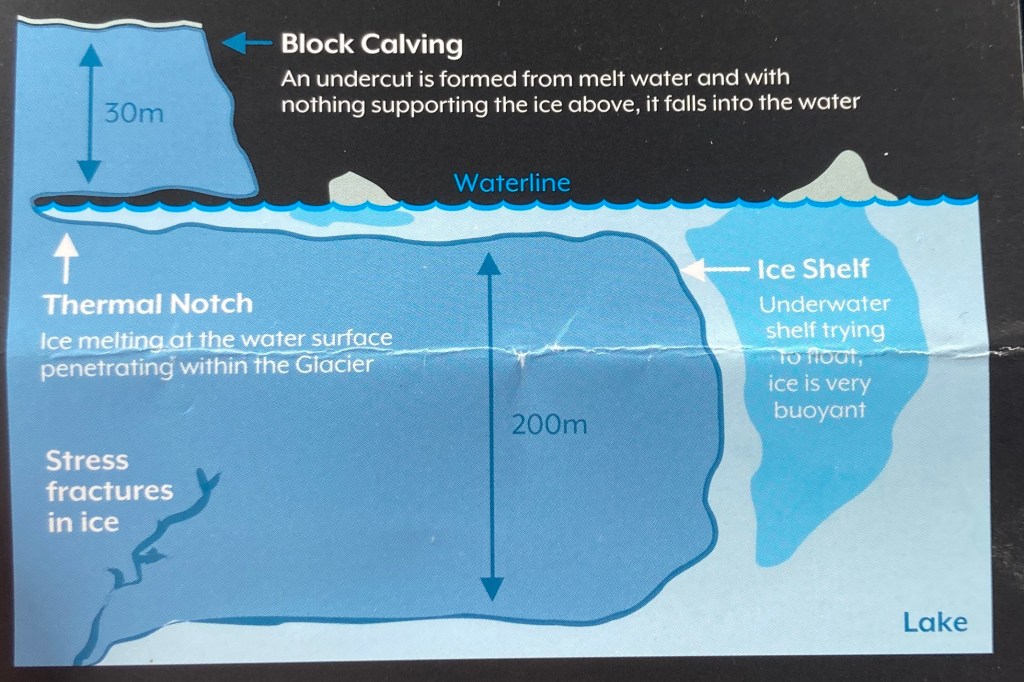
You’ve probably heard that the majority of an iceberg is under the water. Well did you know that icebergs want to maintain at all times a 10% above / 90% below ratio. This ratio influences how the iceberg rotates and moves. As it melts, more ice will rise up and the weight might be redistributed, causing it to roll over.
It makes icebergs dynamic and ever changing. Honestly, I could go on! Here is a little excerpt from the pamphlet with the structure of the iceberg.
If you have an opportunity to do a trip like this, I recommend!
-
Career flopping: Everyone messes up their career just a bit

You’re allowed to mess up your career – say it with me now.
There’s been so much job jumping with the great resignation that I suspect many people have left for roles that weren’t right. Decisions are made in haste, driven by money, driven by an opportunity that the grass could be greener. It’s made me think about career flopping.
Career flops are passages of your career that are particularly uncomfortable – they are survivable but frustrating. It’s a flop of a time. It sucks. Your reality doesn’t match your expectations. You oscillate between hopeless, angry, melancholy, and resentful… and at the end of the day, you go home, flop on your bed and hope tomorrow is better.
Here are some floppy moments:
- You’ve been sold the dream in the interview, and in week two, you discover you hate it – it’s called job washing, apparently.
- You’ve snapped in a team meeting and made your boss angry – dire consequences if your boss doesn’t practice gentle managing.
- You’ve left consecutive jobs after three months because they weren’t right and made you miserable.
- You’ve stayed awake at night wondering how you’ll explain the aforementioned to a judgemental line manager who believes that changing jobs is a sign of weakness.
- You’ve stayed in a role too long, become bitter and twisted, and don’t have the motivation to leave.
- You’ve been marked as underperforming in a performance review.
- You’ve been asked to participate in a formal investigation, and you’re fearful of the impact on your reputation.
- You’ve received a warning for something you disagreed with and felt powerless in the process.
- You’ve asked for more money and were declined for no good reason.
- You’re fired … not made redundant, actually fired.
I’ve dealt with a couple of the above; I’ve also helped my friends and colleagues through them. Sucks man.
I wish I had some magic advice to improve it, but I don’t. When you’re in a flop, it demands to be felt. I know there is something to learn from the flop, like it or not. The flop is a time to go … what the heck! How the god damn did I get here, and what am I going to do now.It’s a kick in the butt from the universe.
It’s a hard lesson.
But it would be best if you learned it.
Early in my career, I was told my probation might not be renewed because I wasn’t meeting expectations. I was facing the possibility of having NO JOB and very little savings. I went home and cried most evenings. The stress made me perform worse. I was like, NOPE, okay, I have to get out of this situation.
The story I would tell myself is that I was hopeless and pathetic – how could this happen. Reinforced by my then-manager telling me, “I wasn’t the person they met in the interview,” – which cut deep. It was a garbage situation.
I had to remind myself I was a person who wasn’t garbage. I wrote on my bathroom mirror, “you’re not garbage; it’s going to be okay”.
Sometimes you flop, and work sucks sometimes, but you’re not alone ♥️

Credit: School of Life App -
How do I recover from an awkward interaction with a peer?

Let’s set the scene with an extremely common scenario I’ve come across time and time again…
So I had a meeting with a peer and I thought we had a good relationship but it was so awkward. I feel like I overstepped somewhere, I don’t really know what happened. Now, I’m really not looking forward to the next interaction.. what do I do?

We’ve all been there, we’ve all had that very human moment where something is just… off.. So start by checking your perception. Ensure you’re looking at the situation for what it is, not worse than it is. If your thoughts are spiraling, then you are indeed in a loop of worse than it is. To get yourself thinking more productively, write down the behaviours that you saw in the interaction only and fact check yourself.
Next, remind yourself that (generally) there aren’t any situations that you can’t come back from. Relationships are continual cycles of connection and disconnection, being in sync and out of sync. What matters is that you recognise it’s a cycle, not a permanent break in the chain.
When people describe feeling awkward, I often hear the following …
- I was caught off guard
- I was unsure about the best way to respond
- I felt I was witnessing to something I shouldn’t
- I felt I was on the spot and I didn’t know the right thing to say
and this often results in…
- Long silences with a stunted restarts of the conversation
- Abrupt changes of topic
- Attempts to make jokes to lighten the mood
So if you feel your behaviour influenced an interaction that led to awkwardness, don’t beat yourself up about it. You’ve got two choices: let it go or tackle it. If you think you need to tackle it then here’s a way to bring it up.
“Hey the other day in the meeting I felt we ended that conversation abruptly. I’m not sure if you felt the same way, but I just wanted to raise it with you because I respect our relationship and want to understand your perspective”
Something like that opens the door for the conversation with the other person. Maybe you have a shared understanding, maybe you don’t. However by bringing it up in a conversational way, you won’t eat yourself up inside.
If you don’t feel like you can bring it up – because maybe you don’t have the relationship – ask someone who does know them well and that you can trust. Get their view on how to best work with that person, while you build that relationship.
Catch those moments while they are small and manageable. Then give yourself a high five for dealing with it!

– okay I’m off to pick up my dinner, souvlaki and chippies! Cherish ✨
Hey! I’m Cherish and I write a blog called So, How’s Work Going? I’ve been working in people and culture (HR) for a while now and you start to see some patterns in what people find difficult to navigate at work. So, this is me sharing advice both through my professional and lived experience as well as stories and insights from others along the way.


 LearnaBee: Thoughtful Growth, One Post at a Time